





Key Takeaways:
- Native advertising is about format. It is paid media designed to match the platform around it.
- Sponsored content is about the paid relationship. A brand pays a publisher, creator, or partner to create or promote content.
- Native is usually better for scale and testing. Use it when you need distribution, traffic, and performance feedback.
- Sponsored content is usually better for trust and education. Use it when credibility, context, or audience alignment matters more.
- Neither tactic works on format alone. Performance still depends on the audience, content quality, placement, and measurement plan.
Related Content: Native Advertising Examples How Native Advertising Works How to Spot Native Advertising
Native advertising and sponsored content get grouped together often, and for good reason. Both are paid, both are built to feel more useful than a standard display ad, and both need clear disclosure. But they are not the same thing.
The difference comes down to format versus relationship. Native advertising is about how a paid placement appears in the user experience. Sponsored content is about the content a brand pays to create, publish, or promote through a partner.
That distinction matters because marketers often compare them too broadly. The real question is not which one is better. It is what job the tactic needs to do.
Native Advertising vs. Sponsored: What’s the Difference?
Native advertising describes the format: paid media that matches the platform around it. Sponsored content describes the relationship: content a brand pays to create or publish through a partner. That difference matters because native is usually better for scalable distribution and testing, while sponsored content is usually better for trust, education, and borrowed credibility.
Native advertising vs. sponsored content at a glance
What Is Native Advertising?
Native advertising is a paid ad format that fits into the surrounding platform experience. Instead of interrupting the user with a banner or pop-up, the ad sits inside a feed, article page, app, or website in a way that feels more natural.
That does not mean you should hide that the ad is an ad. Native advertising still needs clear labeling like “Sponsored,” “Promoted,” “Ad,” or “Paid Content.” The FTC's guide for businesses on native advertising recommends terms that are simple, familiar, and placed where a reasonable consumer will notice them before they click. The goal is not to trick people into clicking. The goal is to make paid distribution feel more aligned with the environment where the user already is. From the reader's side, this is what makes a native ad recognizable in the first place — here's how to spot native advertising in the wild.
Native works best when the content behind the click is strong. A good placement cannot save a weak landing page, vague headline, or offer that does not match the audience.
Benefits of Native Advertising
Native advertising is useful when a brand needs more than a nice-looking ad unit. It gives marketers a way to distribute content, test messaging, and reach people in environments where a standard display ad might be ignored. The value is not just that the ad blends in. It is that the format can support a more natural path from interest to engagement.
The main benefits include:
- Better fit with the user experience: Native ads usually feel less disruptive than standard display placements because they match the surrounding format.
- Useful for content promotion: Brands can use native placements to drive traffic to blogs, guides, videos, case studies, reports, and landing pages.
- Scalable distribution: Native ads can run across publisher networks, social platforms, apps, retail media networks, and programmatic placements.
- Strong testing potential: Headlines, creative, audiences, landing pages, and offers can be tested quickly.
- Support for awareness and consideration: Native placements can introduce a brand before users are ready for a hard conversion ask.
The scale is real at the category level. Per an eMarketer forecast published in December 2025, US native display ad spending is projected to reach roughly $148 billion in 2026, growing about 13% year over year. That growth reflects both broader budget shifts and a steady move toward formats that fit into the user experience rather than interrupt it.
The performance case for native is usually strongest when the brand has something worth promoting and a clear plan for measuring what happens after the click.
Potential Drawbacks of Native Advertising
The main drawbacks of native advertising are traffic quality, measurement discipline, and creative dependency. Native is not a shortcut to better performance. It can look efficient in-platform because CPCs are low or traffic volume is high, but that does not mean the campaign is driving qualified engagement. The risk is optimizing toward the easiest action to get — the click — instead of the action that actually matters.
Common issues include:
- Disclosure has to be obvious: Users should understand when something is paid.
- Creative quality matters: Generic headlines and stock imagery often blend in for the wrong reason — people ignore them.
- Traffic quality can vary: Some native networks can drive volume that looks good in platform reporting but does not translate into meaningful engagement.
- Measurement needs discipline: Clicks are not enough. Marketers should look at scroll depth, time on site, conversions, assisted conversions, lead quality, and downstream performance.
Native advertising is a distribution lever. If the content, targeting, or measurement plan is weak, the format will not fix it.
Examples of Native Advertising
Common examples of native advertising include promoted articles in publisher feeds, recommended-content units, sponsored social posts, promoted product listings on retail sites, and in-feed display units that match the surrounding page design. A native ad should fit the environment around it, but still be clearly labeled as paid. That is the balance to look for in examples: the placement feels natural, but the disclosure is not hidden. For a wider look across platforms and formats, see our full breakdown of native advertising examples.
Common examples include:
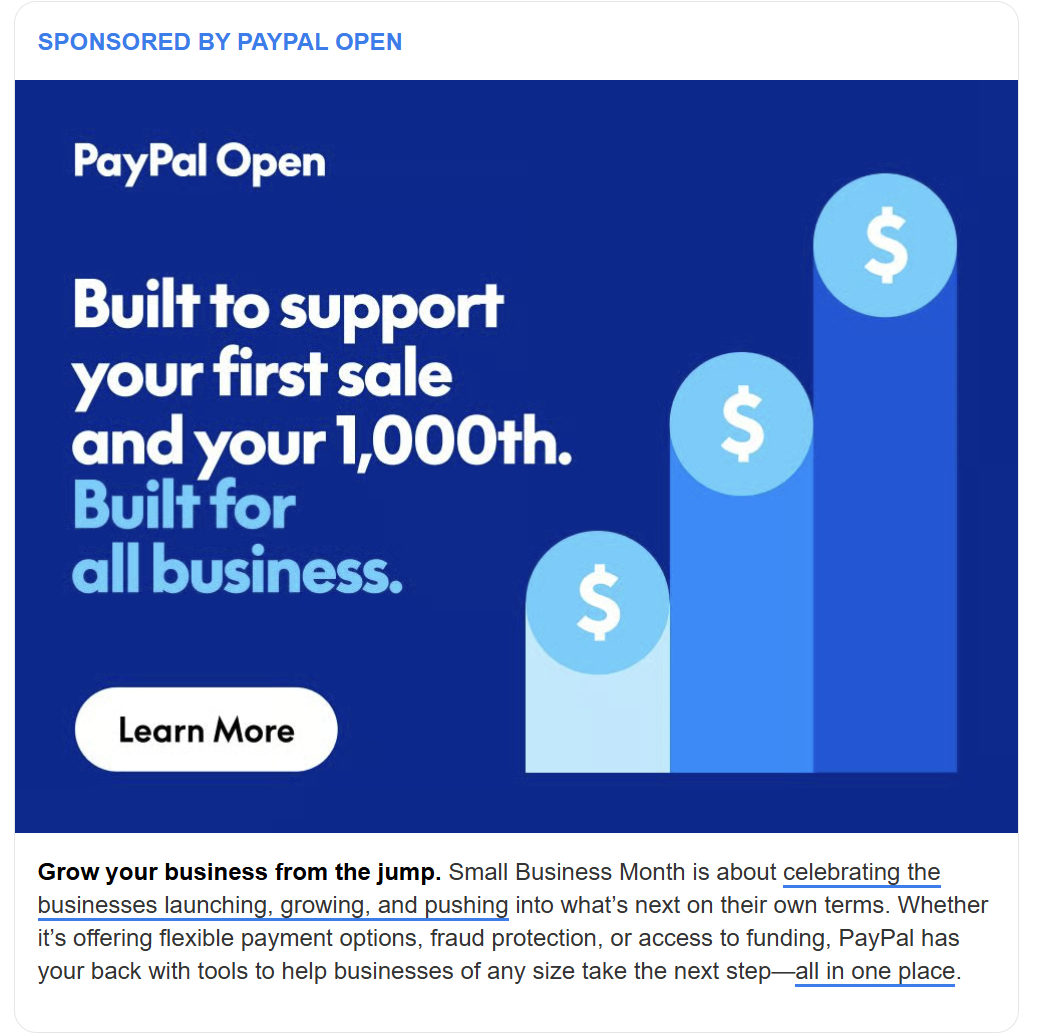
- A promoted article in a publisher feed: This may appear alongside regular editorial headlines, but with a label like “Sponsored” or “Promoted.”
- A recommended content unit at the bottom of an article: These usually appear as suggested articles or related reads, often driving users to brand-owned content.
- A sponsored post in a social feed: The ad looks similar to organic posts on the platform but includes a paid label and usually a CTA.
- A promoted product listing on a retail media site: The placement fits into the shopping experience and sends users directly to a product page.
- A native display ad that matches the page layout: The ad mirrors the design of the surrounding site, while still being identified as paid.



What Is Sponsored Content?
Sponsored content is content a brand pays to produce, publish, or distribute through another channel. It often looks like an article, video, podcast segment, newsletter feature, or social post.
The key difference is the relationship behind the content. A brand is paying a publisher, creator, influencer, or media partner for access to their audience, format, and credibility.
Sponsored content can be native, but it is not always native. A sponsored article on a publisher’s website may also be native advertising if it matches the editorial layout. A paid podcast read is sponsored content, but most marketers would not describe it the same way they would an in-feed native ad.
Sponsored content is usually less about immediate scale and more about context. You are buying more than placement. You are buying proximity to an audience that already trusts the source.
Benefits of Sponsored Content
Sponsored content works best when the goal is trust, education, or credibility — not just quick traffic. The value comes from showing up through a source the audience already pays attention to, with enough space to explain something in a more useful way. That can be powerful, but only when the partner, topic, and audience fit actually make sense.
The main benefits include:
- Built-in audience access: Brands can reach people who already follow or trust a publisher, creator, or media partner.
- More room for storytelling: Sponsored content gives brands space to explain a problem, point of view, product, or category.
- Credibility by association: The right partner can help a brand show up in a more trusted environment.
- Good fit for complex topics: Sponsored articles, videos, newsletters, and podcasts can explain subjects that need more context than a short ad can provide.
- Useful for thought leadership: Brands can use sponsored content to support education, category awareness, and expert positioning.
The caveat is that credibility does not transfer automatically. A weak partner match, overly promotional angle, or topic the audience does not care about can make the whole thing feel forced.
Potential Drawbacks of Sponsored Content
Sponsored content can work, but it is not always easy to scale, optimize, or measure. Unlike native advertising, where marketers can usually test creative, targeting, and landing pages more directly, sponsored content often depends on the partner’s audience, process, and reporting. That can make it harder to know what actually drove performance.
Common drawbacks include:
- Partner quality matters: The content is only as strong as the publisher, creator, or media partner behind it.
- Measurement can be limited: Some partners provide basic reporting, but not always the level of data performance marketers want.
- Production can take longer: Articles, videos, podcasts, and creator posts usually involve approvals, revisions, and coordination.
- Cost can vary widely: Pricing depends on the partner, audience, format, and distribution package.
- Message control may be shared: Brands often need to balance their goals with the partner’s voice, audience expectations, and editorial standards.
Sponsored content is not automatically more trustworthy because it is longer or published by a known partner. The audience still has to care. The content still has to be useful. And the distribution still has to reach the right people.
Examples of Sponsored Content
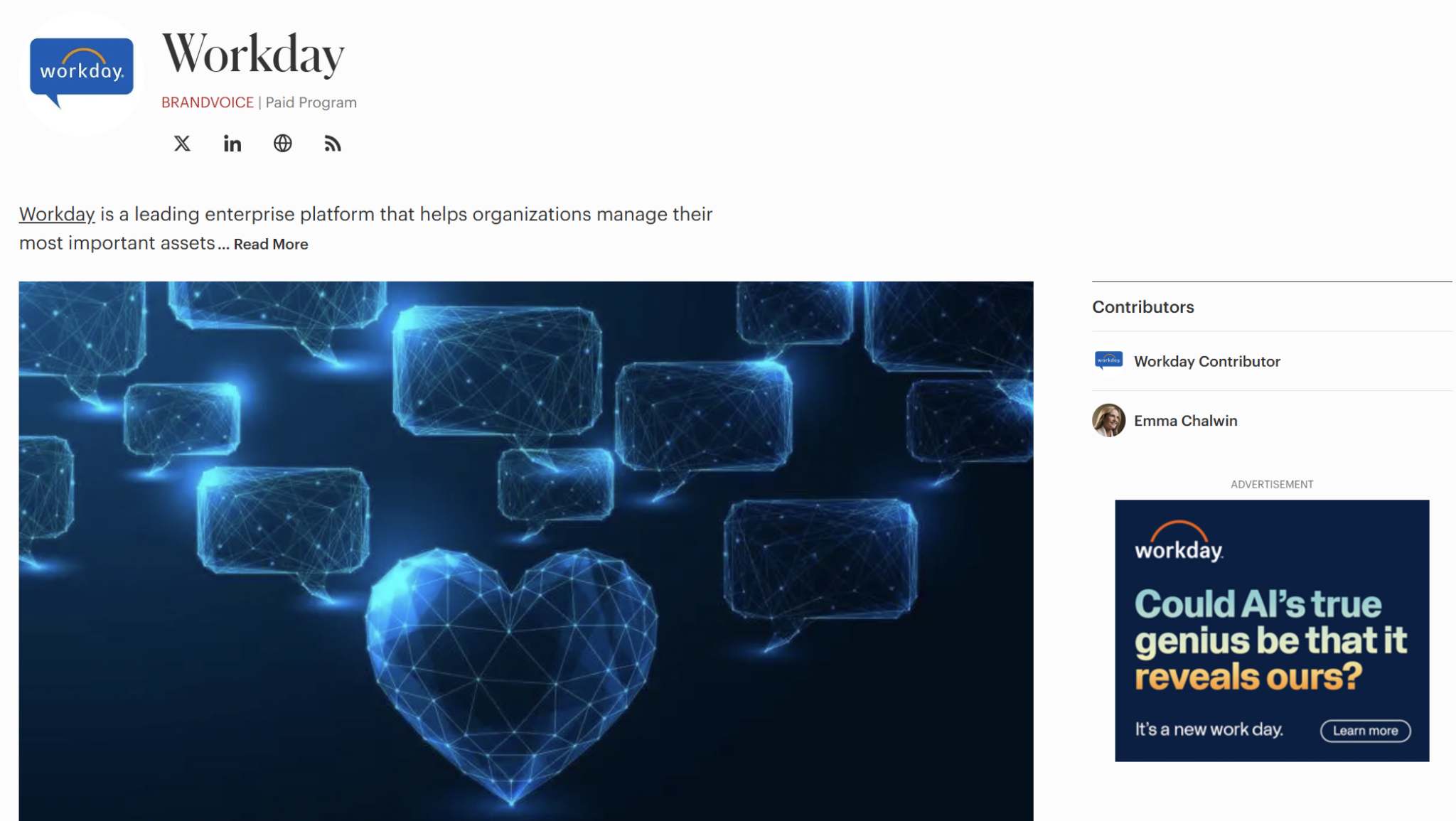
Common examples of sponsored content include sponsored articles on industry publications, paid creator videos, sponsored newsletter placements, and host-read podcast segments. The point is not just that the content is paid. It is that the brand is using someone else’s audience, format, and credibility to get closer to the right conversation.
Common examples include:
- A sponsored article on an industry publication: A cybersecurity company might sponsor an article about compliance challenges. The content educates readers while positioning the brand near a problem its audience already cares about.
- A paid creator video: A skincare brand might pay a creator to publish a routine that includes the product. The post should clearly disclose the paid partnership and still feel useful to the creator’s audience.
- A sponsored newsletter placement: A B2B brand might sponsor a newsletter feature that introduces a report, webinar, or guide to a niche audience.
- A sponsored podcast segment: A company might sponsor a host-read segment in a podcast that reaches a specific professional or consumer audience.
Which Option Makes More Sense for Your Marketing Goals?
The better choice depends on what you need the media to do. Native advertising and sponsored content can both support awareness and engagement, but they usually play different roles in the plan.
Choose native advertising when you want:
- Scalable paid reach
- More traffic to a content asset or landing page
- Audience and creative testing
- Paid distribution that fits the user experience
- Support for awareness, consideration, or conversion campaigns
Choose sponsored content when you want:
- Credibility from a trusted publisher or creator
- More space to explain a topic
- Thought leadership or education
- Access to a specific niche audience
- Brand alignment with a relevant media partner
Use both when there is a strong content asset and a real distribution plan. For example, a brand might sponsor an in-depth article with a respected industry publisher, then use native advertising to extend reach beyond that publisher’s owned audience. Sponsored content builds the credibility. Native advertising helps scale the distribution and test which messages actually get people to engage.
The main thing to avoid is choosing based on format alone. A native ad with weak content behind it is still weak. Sponsored content with the wrong partner is still a bad buy. The better question is what role the tactic needs to play: reach, testing, traffic, education, credibility, or some combination of those.
Get More From Native and Sponsored Content
Native advertising and sponsored content both need a clear distribution plan. The format matters, but it will not carry the campaign on its own. Performance depends on the audience, placement, message, content quality, and how clearly success is measured.
Symphonic Digital helps brands plan and manage paid media strategies across programmatic advertising, native placements, and audience-focused campaigns. The goal is to get the right content in front of the right people, then use the data to improve what happens next.
Need help turning paid content into a stronger media plan? Learn more about Symphonic Digital’s programmatic advertising services or contact us to talk through the right approach for your campaign.
Native Advertising vs. Sponsored Content FAQs
Is sponsored content the same as native advertising?
Sponsored content is not always the same as native advertising. Sponsored content is content a brand pays for. Native advertising is a paid format that matches the surrounding platform experience. Sponsored content can be native when it appears in a format that blends with the publisher or platform.
Is native advertising better than sponsored content?
Not automatically. Native advertising is usually better for scalable distribution, traffic, and testing. Sponsored content is usually better for credibility, education, and access to a trusted audience. The better option depends on the campaign goal, the quality of the content, and how success will be measured.
Can sponsored content be used in programmatic advertising?
Sponsored content and programmatic advertising can work together, but they are not the same thing. Sponsored content is usually created with a publisher, creator, or partner. Programmatic advertising can help distribute related content through targeted paid placements across relevant channels.
How do you measure native advertising and sponsored content?
Do not stop at impressions or clicks. For native advertising, look at engagement quality, scroll depth, time on page, conversions, assisted conversions, and lead quality. For sponsored content, look at reach, engagement, referral traffic, audience fit, downstream conversions, and whether the partner provided meaningful reporting.

.png)
.png)



.png)






