




Key takeaways
- Google confirmed on August 26, 2026, that links in its search results now route through a google.com/goto redirect. It began testing the change in July 2026.
- The destination URL is encoded inside the Google link rather than written into it, so tools reading results at scale must follow every link individually instead of reading a page in one request.
- Searchers see almost no difference. The real URL still appears under the result title. What changed is what you see on hover or copy.
- Rankings are unaffected. This changes how ranking data is measured and collected, not how Google ranks pages.
- Rank trackers and SERP scrapers absorb the cost.
Google’s critical blue links changed on August 26, 2026, in a sneaky, quiet kind of way. The average user won’t notice anything, but as marketers, we need to be aware. Rather than sending users to a website from the blue link (like it’s always been), every click is going through google.com/goto as a redirect to the website. Again, users don’t see this, but the impacts to analytics data, third-party tool scraping, and AI platforms could be massive.
Let’s look more at what is happening, why Google is doing this, and how it may or may not impact the tools and information we all rely on.
What is Google's /goto Redirect?
Google has started redirecting search result links through a new address, google.com/goto. Instead of clicking directly through to a page, your click now passes through a Google-owned redirect first. The destination URL is encoded inside the Google link rather than written out in it.
Google began testing this back in July 2026, and on August 26 a Google spokesperson confirmed it's rolling out for real, saying the company has "a long history of deploying technical measures against evolving forms of abuse."
Translation: Google didn't build this for users. It built it to make its search results harder to scrape. This is a direct attack at AI tools scraping Google’s search results for its own output.
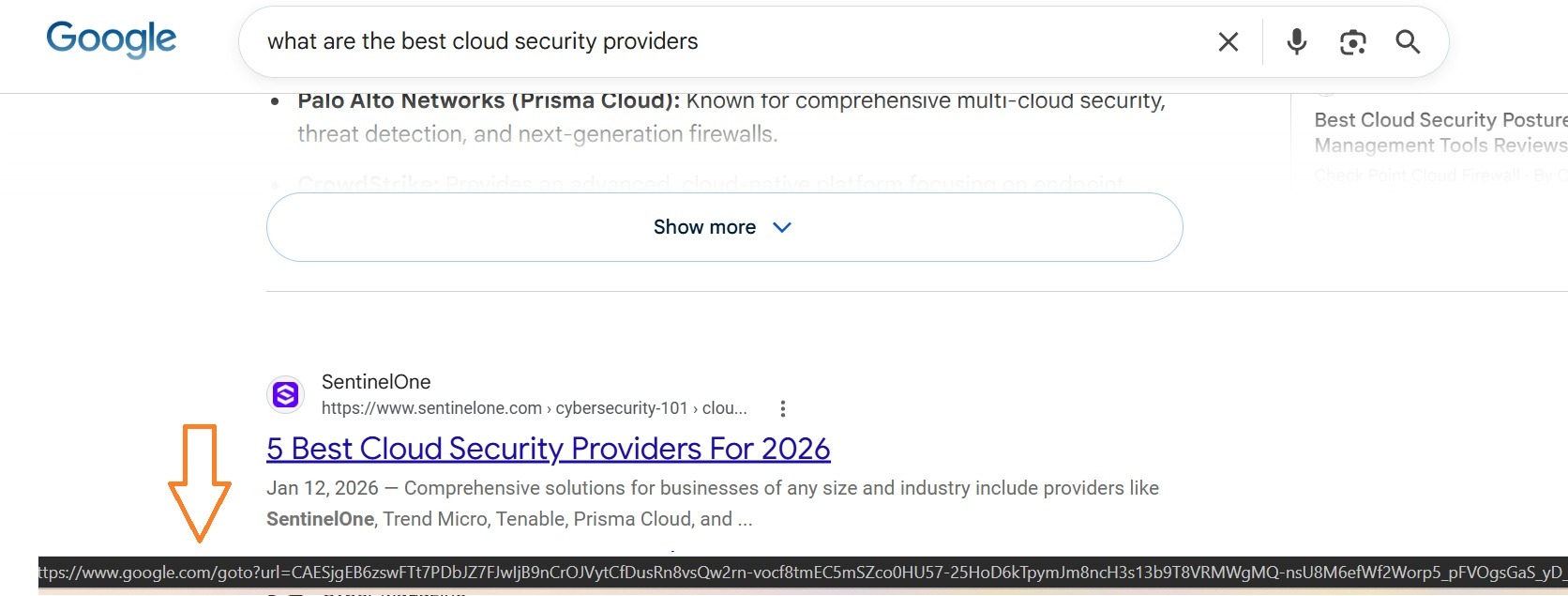
Editor's note (Aug 27, 2026): In our own testing today, the goto redirect only showed up when searching in incognito, not while logged into a Google account. That's consistent with how Google typically stages a rollout, gating it by different signals for different sessions, so don't be surprised if what you see doesn't match what a colleague sees right now. We'll update this note as the rollout becomes more consistent.
Why Google is Doing This
Google is in an ongoing legal fight with SerpApi, a company that scrapes Google's search results and resells that data to other businesses. Google sued them in December 2025, and that case is still playing out in court.
This new redirect change in search results is widely seen as a way to make that kind of large-scale scraping much harder, since every link now has to be followed through Google's servers one at a time. The encoded links can't be read directly, only followed, so a tool that used to read a full page of results in one request now needs a separate round trip for every link on it.
But SerpApi isn't the only one scraping Google. AI companies do it too, pulling search results to help ground their answers and citations in real, current information. So while this change is framed as an anti-scraping and anti-abuse measure, it also touches the much bigger question of who gets easy access to the web's most-used index of information, and on what terms.
How Does the /goto Redirect affect SEO Tools and Reporting?
What Happens to Rank Tracking Data
For businesses that track their search rankings, this creates a real problem. Rank tracking tools like Ahrefs and Semrush SEMrush work by essentially reading Google's results pages in batches. If every link is a redirect that can't be easily decoded, those tools have to work harder, and slower, to figure out what's actually ranking. Expect some short-term issues or lag in ranking data while tools adapt.
Remember that this isn't the first time (and unfortunately not the last) that tracking data has been impacted by Google restricting automated access to its results. Google's fight with AI. In September 2025, Google’s change to the num=100 parameter caused a widespread dip in reported impressions.
The Quieter Risk: Analytics and Attribution
There's a second, quieter risk we also need to consider: website analytics. If this redirect strips or rewrites the information that normally moves with a click (the referrer data that tells your analytics platform "this visitor came from Google search"), some organic traffic could start showing up misclassified as direct traffic instead. That would make a website's search performance look worse than it actually is, purely as a measurement glitch rather than a real drop. Any team watching their analytics closely over the next few months should keep this in mind before assuming a traffic dip means something went wrong.
To be clear: none of this changes how websites actually rank. It changes how easily that ranking data can be measured and collected.
The Bigger Picture: What This Means For AI Tools And The Open Web
Google is tightening control over access to its results.
That matters beyond SEO because Google Search still functions as a kind of backend data source for a lot of the AI world. AI assistants and AI search tools Search engines and AI assistants often lean on Google's results to fetch current information and ground their answers in something real. If it becomes harder for anyone outside Google to reliably read those results, that has negative effects on how AI tools access and reference the live web, not just for how marketers track keyword rankings.
What Should Marketers Do About The /Goto Redirect?
For most people, nothing changes today. For businesses and marketing teams, it's a good moment to:
- Treat any sudden dip in reported organic traffic with some skepticism until you've ruled out a measurement issue.
- Ask your SEO or analytics provider whether their tools have been affected and how they're adapting.
- Zoom out from precise ranking positions and focus more on trends over time. As data collection gets harder across the board, the exact numbers matter less than the direction they're moving.
Google hasn't said much publicly about this beyond confirming it's happening. We'll be watching how it develops and will update as more becomes clear.
Google's /goto redirect: frequently asked questions
What is google.com/goto?
Google.com/goto is a redirect Google now uses on links in its search results. Instead of pointing straight at a destination page, a result link points to google.com/goto with the target address encoded inside it. Your click passes through Google's servers first, then lands on the same page it always would have.
Does the /goto redirect affect my rankings?
No. The redirect changes how links are delivered inside Google's results, not how Google ranks pages. It affects how easily ranking data can be measured and collected, which is a reporting issue rather than a performance one.
Why is Google redirecting search result links?
Google described the change as a technical measure against evolving forms of abuse and did not name a specific target. The search community reads it as an anti-scraping measure, and the mechanism supports that: encoded links can only be followed, not decoded, so reading a full page of results now takes hundreds of separate requests instead of one. Google is also litigating against SerpApi, a company that scrapes and resells its search results, in a case filed in December 2025.
Will this break my Google Analytics data?
There's no evidence it will, and no one has reported traffic being misattributed so far. The redirect stays on Google's own domain, so the referrer your analytics platform receives should still read as Google. It's worth monitoring rather than worrying about, and Search Console is the more reliable reference point if your tools start to disagree.
Do I need to change anything on my website?
No. Keep your redirects, canonical tags, internal links, and site architecture exactly as they are. This change happens inside Google's search results before anyone reaches your site, so there is nothing to implement on your end.
Why don't I see the /goto redirect in my own searches?
The rollout isn't consistent across every session. Reports show the redirect appearing reliably on logged-out and incognito searches, and inconsistently for signed-in users, which is typical of how Google stages a change. You may see different behavior than a colleague searching the same term at the same time.





.png)